Architecting Scalable Enterprise SOC Ecosystems
Modular risk-based SOC baseline stacks (Stacks A, B1-B3) using Wazuh, Suricata, Security Onion, Squid, and Shuffle. Designed to scale from standard endpoint visibility to full automated containment and adversary simulation.
The Problem & The Goal
The cybersecurity industry suffers from "tool glorification"—a reactive, tool-driven approach to security that proves both expensive and ineffective. I noticed that Small and Medium Enterprises (SMEs) typically lack the budgets and specialized skills to afford integrated enterprise solutions. Responding to incidents by purchasing fragmented tools creates a brittle perimeter defense rather than a robust, layered defense-in-depth strategy.
My goal was to design and validate a methodology that counters this reactive model by starting with risk analysis rather than software selection. I aimed to formulate 4 modular architectural tiers (Categories A, B1, B2, B3) mapped to business size and maturity. Success meant delivering a cost-effective, tool-agnostic roadmap that SMEs could use to achieve compliance and withstand sophisticated attacks.
Process, Research & Architecture Solution
I rejected the "tool-first" mindset and began with a comprehensive conceptual analysis of business risks, threat vectors, and compliance requirements. I categorized businesses into four tiers based on endpoint volume and operational complexity, mapping specific security needs to abstract controls (like NDR or EDR) before selecting any technology. To validate this defense-in-depth architecture without requiring prohibitive financial investments, I designed a baseline SOC stack for each category utilizing open-source tools.
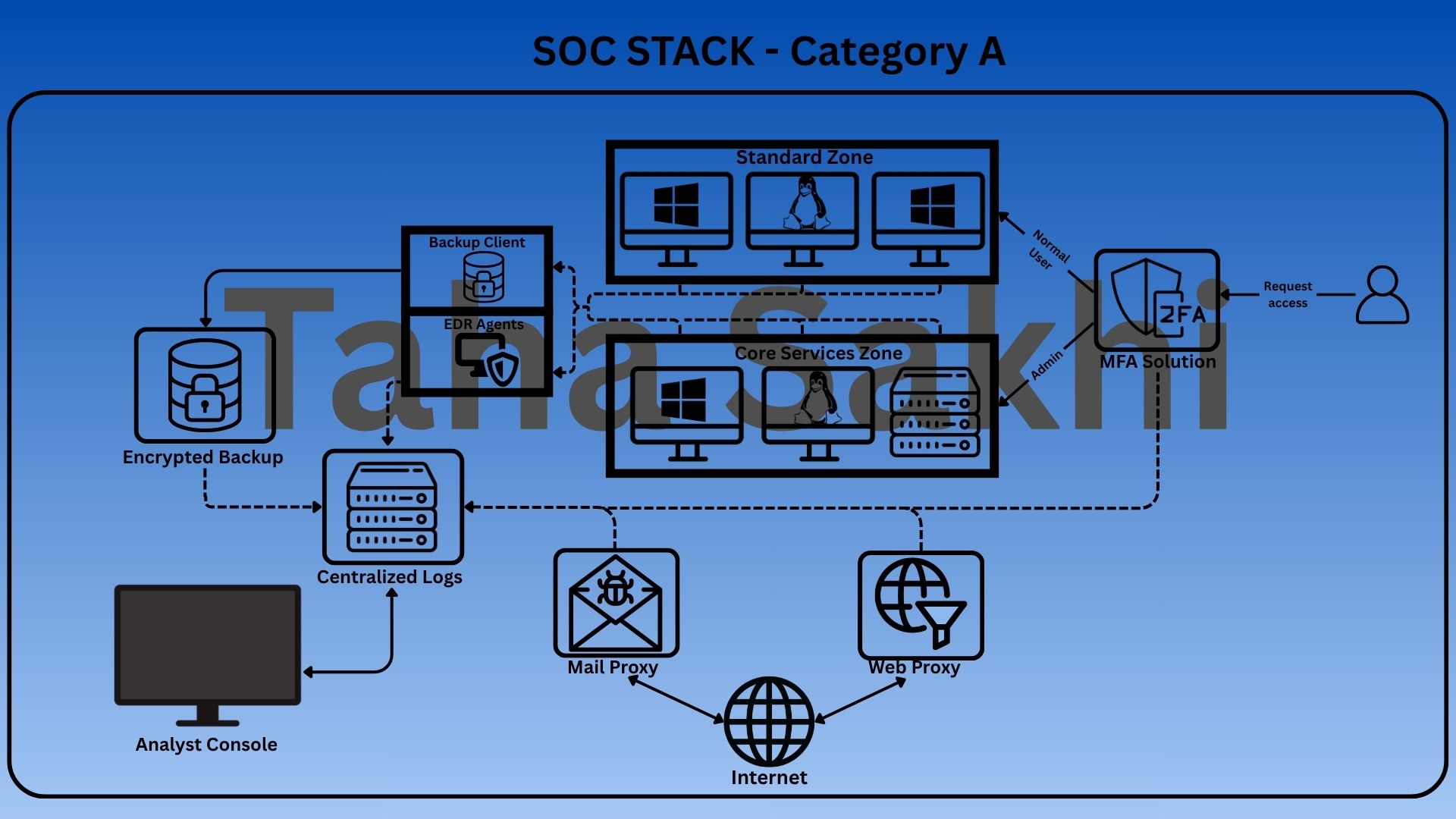
SOC STACK - Category A
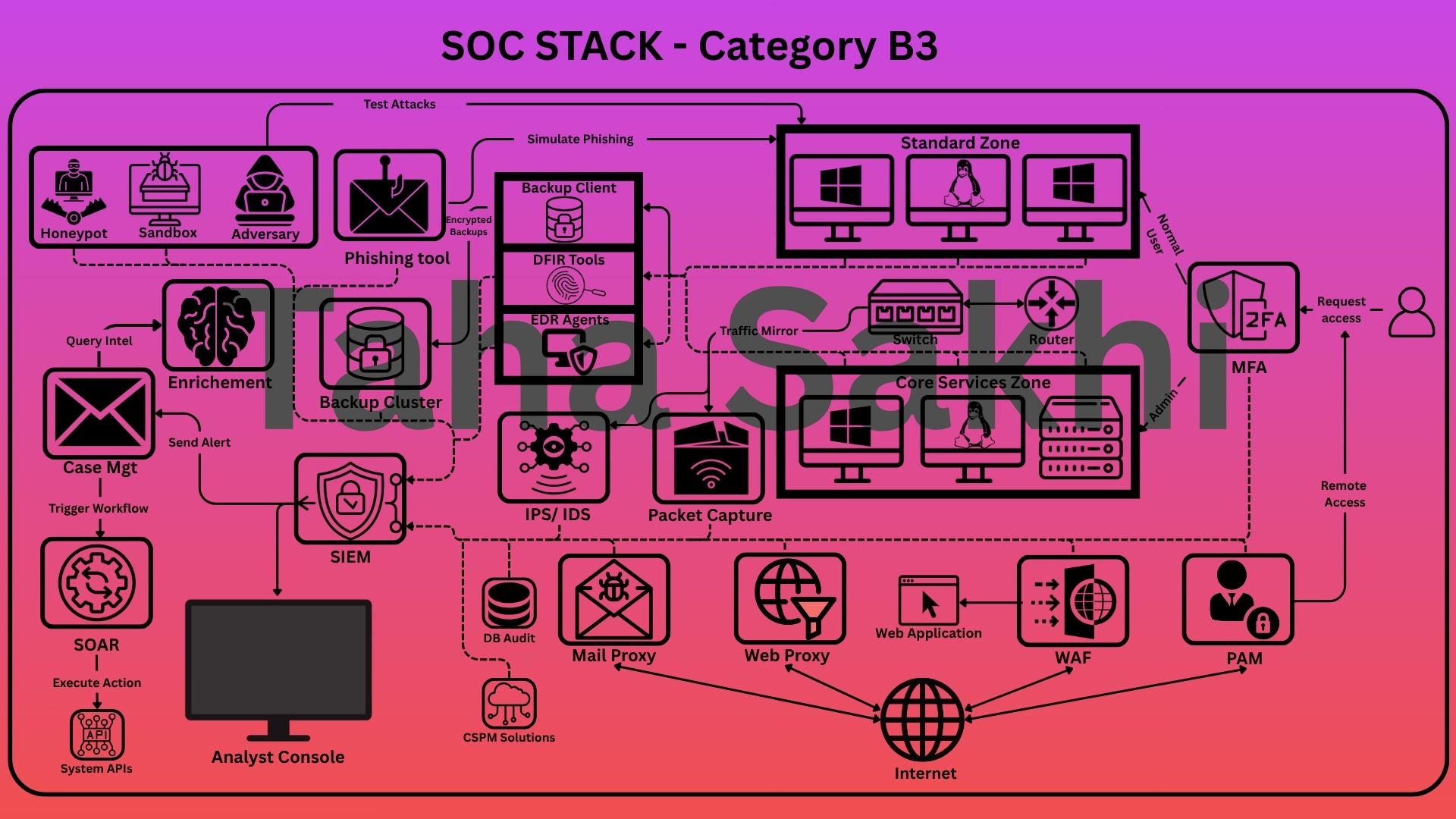
SOC STACK - Category B3
I developed a layered Multi-Tier SOC Architecture that separates standard user traffic zones from core security services and analyst consoles. For Category A (Foundational), I integrated Wazuh (EDR/SIEM), Borg (Encrypted Backups), PrivacyIDEA (MFA), Rspamd (Mail Proxy), and Squid (Web Proxy). For Categories B1-B3 (Advanced), I progressively scaled the architecture to include Security Onion, TheHive (Case Management), Shuffle (SOAR) for automated containment, and Caldera for adversary simulation.
| Scenario | Category | Tactic | Technique |
|---|---|---|---|
| Attack 1 | Initial Access | Phishing | T1566.002 (Spear phishing Link) |
| Attack 2 | Execution | User Execution | T1204.002 (Malicious File / Macro) |
| Attack 3 | Credential Access | OS Credential Dumping | T1003 |
Attack Simulation Efficacy
Tools & Technologies Utilized
- Wazuh
- Suricata
- Security Onion
- Squid
- Rspamd
- BorgBackup
- PrivacyIDEA
- Shuffle SOAR
- Caldera
Results & Impact
- I deployed the Category A stack in a virtualized lab and subjected it to simulated multi-stage attacks mapped to the MITRE ATT&CK framework.
- The architecture successfully blocked 17 out of 20 attack stages, achieving an 85% success rate against phishing, malware execution, and credential dumping.
- Ultimately, I delivered a strategic "fortification model" that enables clients to implement a validated open-source baseline and strategically replace high-maintenance components with commercial tools as they grow.
- Through this project, I transitioned from a purely technical perspective to a strategic, business-aligned mindset, learning that effective security is a continuous process built on risk assessment, not just software.